Research Article: Aditya, V., Pasul, Y., & Ghosh, D. (2025). At a Crossroads: Impacts of a Major Highway on Mammal Occurrence in a Biodiverse Tropical Forest. Biotropica, 57(6), e70131.
Blog Author: Shashank Dalvi
Key highlights:
- The study examines how a major highway running through a protected tropical forest affects the presence and distribution of wild mammal species.
- The study was conducted in the Nagarjunasagar–Srisailam Tiger Reserve, a key biodiversity stronghold in the Eastern Ghats, where a major national highway cuts directly through protected forest.
- The researchers compared mammal activity close to the highway with areas deeper inside the forest that experience little human disturbance.
- Remote motion-sensing cameras were placed in the forest to automatically photograph animals and record how often different species appeared near the road and in undisturbed areas.
- The study found that plant-eating mammals were more commonly detected near the highway, while meat-eating mammals showed a stronger preference for undisturbed forest areas.
- These findings suggest that roads influence wildlife in different ways and emphasize the importance of wildlife-sensitive planning and mitigation to reduce negative impacts on sensitive species, especially carnivores.
Deep inside the forests of the Eastern Ghats lies the Nagarjunasagar–Srisailam Tiger Reserve—India’s largest tiger reserve. At first glance, one of the largest Tiger reserves in India seems vast and secure. But running straight through its core is a busy national highway, carrying hundreds of vehicles every day. What does this mean for the animals that live here? A recent study set out to answer exactly that.
Using camera traps, researchers from the Centre for Wildlife Studies compared wildlife along the highway with a nearby forest trail that is completely closed to traffic. Over just two months, the cameras captured more than 2,600 animal detections, including tigers, leopards, deer, wild dogs, and bears. The results of this study go against the common assumptions of how wildlife responds to roads.
Surprisingly, more animals were seen near the highway than along the quiet forest trail. But this did not mean that roads are good for wildlife. A closer look revealed a clear divide.
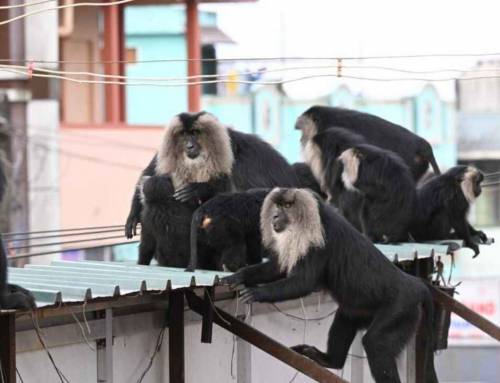
Herbivores—such as deer, wild boar, hares, and primates—were far more willing to use roadside areas. Roadsides often have lush vegetation, open spaces, and even food scraps left behind by people. For these animals, highways can seem attractive.
Carnivores, however, told a very different story. Tigers, leopards, and dholes largely avoided the highway and were far more common along the undisturbed forest trail. When they did appear near the road, it was almost always after traffic had stopped for the night. This makes one thing clear: it isn’t the road itself that scares big predators—it’s the vehicles, noise, and lights.
The traffic on these highways acts as an invisible barrier. For wide-ranging species like tigers, traffic on the highways causes fragmentation in habitat, disrupts movements, and increases the risk of conflict and road kills. It reshapes the entire ecosystems, allowing herbivores to increase while predators to retreat.
This finding is especially worrying because there are plans to widen the highway running through the reserve. Even small expansions can lead to forest loss, faster traffic, and more disturbance—particularly dangerous in a landscape where protection is already limited.
The message from this study is not anti-development.
Roads are necessary. But how and where we build them matters deeply. Simple measures—speed limits, traffic restrictions at night, wildlife crossings, and careful planning—can make the difference between coexistence and collapse. At a time when India’s forests are increasingly crisscrossed by infrastructure, this study reminds us of a crucial truth: for wildlife, a road is never just a road—it is a choice we make about their future.
You can access the original article here.
Keywords: Eastern Ghats | India | mammals | protected areas | richness | vehicular traffic