Research Article: Dhawale, A. K., & Sinha, A. (2022). Far from home: The synurbisation of a rainforest-evolved primate, the lion-tailed macaque Macaca silenus, and its recent adaptations to anthropogenic habitats in southern India. Journal of Biosciences, 47(4).
Blog Author: Nikita Yardi
Key highlights:
- Researchers documented a troop of lion-tailed macaques leaving their forest fragments and moving into human settlements.
- These endangered primates, once thought unable to survive outside rainforests, are now adapting to life amongst people in the Valparai plateau in southern India.
- Macaques have modified their behaviour to better navigate human-dominated landscapes, from foraging in garbage pots to using overhead cables to move around.
- This hints at “synurbisation”, a process by which wild animals adapt to live in urban or semi-urban environments.
Within the misty Western Ghats of Southern India, an incredible story of adaptation is unfolding. The lion-tailed macaque, a rare primate, long believed to be confined to the fragmented pockets of untouched rainforests of India’s western ghats, has begun venturing into human-dominated landscapes. A recent study by researchers Ashni Kumar Dhawale and Anindya Sinha reveals that a troop of these endangered monkeys has permanently expanded its home range into the bustling human-settlements of the Valaparai plateau.
Traditionally, the lion-tailed macaque has been seen as a treetop specialist, a fruit-dependent primate, relying almost exclusively on the undisturbed native vegetation of its rainforest home. But the troops in the Puthuthottam forest fragment are challenging that understanding. Over the past five years, they have begun visiting the nearby human habitats, even using the areas that are devoid of their natural habitat.
As they move between forest canopies and human-altered landscapes, their exploration appears undeterred by tea plantations or degraded habitat. In the process, they have altered their behavior, foraging less, resting more, and displaying noticeable changes in their social dynamics.
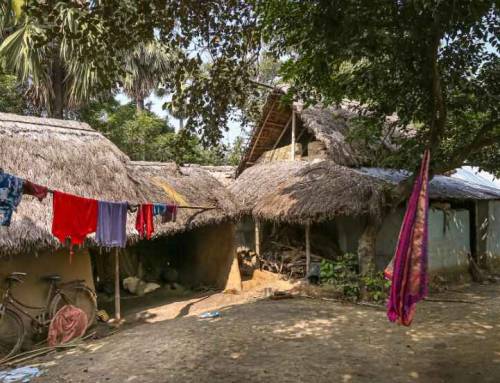
As this shift becomes more apparent, one troop in particular has pushed the boundaries even further. It gradually moved out of the semi-natural forest patch and into the neighbouring Rottikadai and Iyerpadi settlements, foraging mostly on garbage pits, few fruiting trees, pruned tea fields in search of insects and even the edges of nearby swamps. Their movement eventually expanded to include a third settlement, which they reached by travelling along an overhead cable to avoid scrublands. Initially, the troop roosted in an Acacia stand on the settlement’s edge, but within a year they had shifted their roosts to the heart of the settlement itself. While this bold exploration may have been reinforced by pressure from a much larger, dominant troop within the forest fragment that pushed them northward towards uncontested resources, it ultimately showed growing adaptability and an expanding use of human-modified landscapes.
The authors argue that these behavioral changes highlight both; the capacity of wildlife to human-altered environments, and their vulnerability to them. For conservationists, this means looking beyond merely protecting the remaining rainforest patches and also prioritising that macaques can move freely between them. And although the observations of the study largely come from a single troop, they demonstrate the species’ potential to navigate human-dominated landscapes. Whether they can travel longer distances, enough to maintain a healthy gene flow, remains an open question that requires long-term studies. What is clear is the pressing need to strengthen corridors connecting fragmented native habitat, allowing these macaques to move through their landscape.
To access the original article, click here.
Keywords: Lion-tailed macaque, Western Ghats, Valparai plateau, human–wildlife interaction, adaptation, synurbisation, conservation, wildlife corridors.